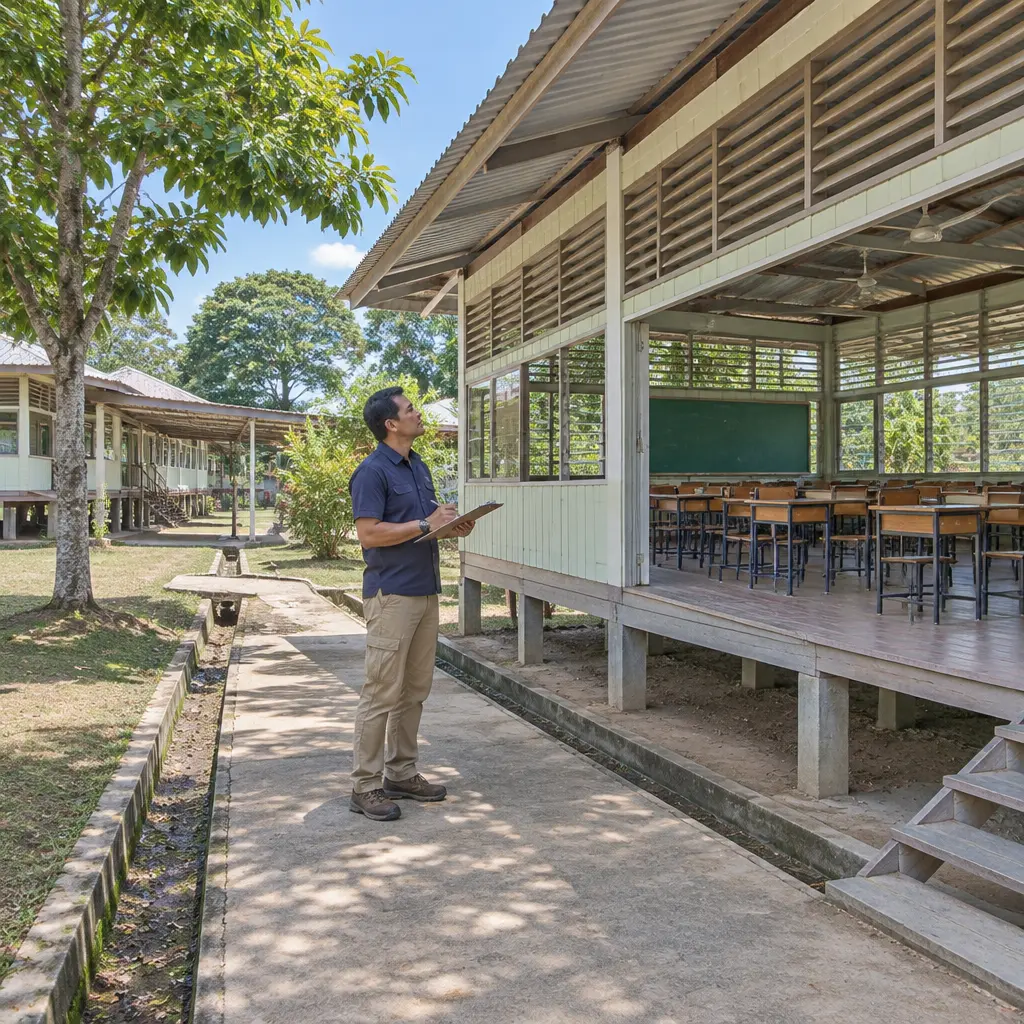
How Climate Change Is Destroying Africa’s Schools and Learning Futures
Climate change is disrupting African education through floods, heat, drought, and other hazards that damage school buildings, interrupt classes, and make learning harder. UNICEF estimates that at least 242 million students in 85 countries had their schooling disrupted by climate-related events in 2024; the figure is global, not Africa-specific, but it shows the scale of the threat. In Africa, where many schools and communities already face limited resources and high climate exposure, the effects can compound existing barriers to attendance and achievement. The damage is not limited to classrooms: it can affect children’s health, safety, nutrition, and prospects for completing school. This article explains how climate hazards interrupt learning, why some students are more vulnerable, and what climate-resilient schools and education planning can do in response.
Climate change intensifies threats to African schools and learning
Climate change refers to long-term shifts in temperatures and weather patterns, driven today primarily by human activities such as burning fossil fuels. The Intergovernmental Panel on Climate Change (IPCC) finds that human-caused warming is already affecting weather and climate extremes across every region. For African schools, this matters because floods can destroy or isolate campuses, extreme heat can make classrooms unsafe or uncomfortable, and drought can deepen water insecurity and household hardship.
The IPCC’s Sixth Assessment Report describes Africa as highly vulnerable to climate change, with risks amplified by poverty, dependence on climate-sensitive livelihoods, infrastructure gaps, and limited capacity to adapt. The continent’s contribution to historical global greenhouse-gas emissions has been comparatively low, yet its communities face significant and growing climate impacts. Education systems are part of this exposure: school buildings, roads, water supplies, electricity, teachers’ homes, and students’ livelihoods can all be affected by the same hazard.
The scale of disruption is also visible in global data. UNICEF’s 2025 analysis reported that 242 million students experienced climate-related school disruptions during 2024, including closures and interruptions associated with heatwaves, storms, floods, and droughts. This total covers 85 countries worldwide and should not be mistaken for an Africa-only estimate. It nevertheless demonstrates that climate hazards are already interfering with education on a very large scale.
Climate hazards damage African school infrastructure and interrupt instruction
School disruption is a break in teaching and learning caused by a hazard or its consequences, such as a closure, damaged building, impassable route, or loss of essential services. UNESCO and UNICEF education guidance treats safe facilities and continuity of learning as central to education in emergencies. In practice, disruptions may last a day, a term, or longer; even when a school remains open, unsafe conditions can reduce attendance and the time available for instruction.
The principal pathways include direct physical damage, restrictions on access, and pressure on household resources. These effects often overlap. A flood may damage a classroom and a bridge at the same time; a drought may reduce water at school while also forcing families to spend more time securing water or income. The result is not merely a building problem but a chain of obstacles to consistent learning.
Floods and storms destroy classrooms and cut off access
Floods and storms can wash away or weaken school buildings, damage learning materials, contaminate water points, and make roads or footpaths unsafe. Schools built in flood-prone locations or with inadequate drainage and construction are especially exposed. When classrooms are used as emergency shelters, communities gain a vital refuge, but lessons may be suspended until displaced families can return and facilities can be cleaned and repaired.
The 2022 floods in Pakistan, though outside Africa, illustrate how a single disaster can affect education at national scale: UNICEF reported that nearly 27,000 schools were damaged or destroyed. In Africa, Cyclone Idai in 2019 caused severe damage across Mozambique, Malawi, and Zimbabwe, including damage to education facilities and disruption to children’s schooling. These events show why school resilience requires attention not only to classrooms but also to drainage, sanitation, safe routes, emergency planning, and rapid repair capacity.
Extreme heat reduces safe and effective learning time
Extreme heat is a health and learning hazard when high temperatures make classrooms uncomfortable or unsafe, particularly where buildings lack shade, ventilation, cooling, or reliable drinking water. Heat stress can cause fatigue, dehydration, and difficulty concentrating. It can also affect teachers’ ability to teach and students’ capacity to participate, so an open school is not necessarily a school where learning conditions are adequate.
UNICEF’s 2024 report, “Learning Interrupted: Global Snapshot of Climate-Related School Disruptions in 2024,” identifies heatwaves as a major driver of school interruptions worldwide. Research synthesized by the IPCC also links high temperatures with risks to health and human performance. In African regions already experiencing high temperatures, school calendars, classroom design, shade, ventilation, hydration, and heat-health protocols are therefore relevant adaptation measures—not optional comfort improvements.
Drought and water insecurity undermine attendance and school services
Drought is a prolonged period of unusually low water availability that can affect household livelihoods, school water supplies, sanitation, and food security. When a school lacks safe water, handwashing and functioning toilets become difficult; when families lose income or food, children may miss lessons to help at home or may struggle to learn because of hunger and stress.
The World Meteorological Organization’s State of the Climate in Africa reports document severe drought impacts in parts of the continent, including the Horn of Africa. During the prolonged drought affecting the region from 2020 to 2023, millions of people faced acute food insecurity and displacement, according to humanitarian reporting by the United Nations. Such crises can disrupt education through both school-level water shortages and household-level pressures, with pastoralist and rural communities often facing particular difficulties in maintaining regular attendance.
Climate disruption widens inequalities in African education
Climate vulnerability in education is the unequal likelihood that a hazard will harm students’ access, safety, or learning because of their circumstances and the resources available to them. It is shaped by poverty, disability, gender, location, displacement, and the quality of school infrastructure. The same flood or heatwave can have very different consequences for a student with a safe transport route and a resilient school than for one whose school is remote, overcrowded, or without water and sanitation.
These vulnerabilities connect climate hazards to wider education inequalities. The World Bank, UNESCO, and UNICEF have repeatedly identified poverty, gender, disability, and conflict as factors that can limit children’s access to education. Climate shocks can intensify those barriers, particularly when public services and household coping resources are already stretched.
Girls face increased risks when services and household resources fail
Girls’ education can be affected when drought or disaster increases unpaid care work, raises safety concerns on journeys to school, or interrupts access to private, functional sanitation. In some settings, families facing financial pressure may prioritize boys’ schooling or withdraw girls to support household work. These outcomes are not inevitable consequences of climate change; they arise where hazards interact with existing gender inequalities and weak protection systems.
UNICEF’s 2023 report on girls’ education and climate strategies emphasizes that climate policy and education planning should account for gender-specific barriers. Practical measures include safe water and separate, usable toilets at schools, continuity plans that protect girls’ enrollment during emergencies, and meaningful participation by girls in local climate planning.
Displacement and disability make continuity harder
Climate-related displacement occurs when people have to leave their homes because of sudden disasters or slow-onset pressures such as repeated flooding, drought, or loss of livelihoods. Displaced students may lose documents, face unfamiliar enrollment rules, or arrive in communities whose schools are already overcrowded. Children with disabilities may face additional barriers when evacuation routes, temporary classrooms, learning materials, and sanitation facilities are not accessible.
The Internal Displacement Monitoring Centre has documented large numbers of disaster-related internal displacements worldwide, including in African countries, while noting that disaster displacement is not the same as a count of unique people. Education responses therefore need flexible enrollment, accessible temporary learning spaces, portable records, psychosocial support, and coordination between education and humanitarian agencies.
Climate-resilient schools can protect learning futures
A climate-resilient school is a school system and learning facility designed and managed to anticipate, withstand, adapt to, and recover from climate hazards while keeping education safe and continuous. UNICEF and the Global Alliance for Disaster Risk Reduction and Resilience in the Education Sector (GADRRRES) promote comprehensive school safety, which links safer learning facilities, school disaster management, and risk-reduction education. The approach recognizes that resilience depends on buildings, people, services, and plans working together.
Resilience does not mean that every school can avoid closure during a dangerous event. It means reducing preventable damage, preparing for interruptions, and restoring learning quickly and equitably. That requires climate-risk information to shape decisions about school locations, construction, budgets, calendars, and emergency support.
Build and retrofit schools for local climate hazards
Climate-informed construction uses local hazard assessments and safe building standards to reduce exposure to floods, storms, heat, and water scarcity. Depending on location, measures may include raising floors, improving drainage, reinforcing roofs, adding shade and cross-ventilation, protecting water sources, and providing accessible evacuation routes. Maintenance is essential: a well-designed building can still become unsafe if drains are blocked or roofs and sanitation facilities are neglected.
The World Bank’s guidance on resilient infrastructure emphasizes the value of assessing climate risks over the life of an asset. For education ministries and local authorities, this means considering projected conditions—not only historical weather—when choosing sites and setting construction standards. An illustrative chart for this section could compare the number of school days lost to heat, floods, and drought in a selected district, using ministry attendance and hazard data rather than combining incompatible national estimates.
Plan for continuity before, during, and after emergencies
Education continuity planning sets out how students can keep learning when schools close or become inaccessible. Plans can include early-warning procedures, evacuation protocols, temporary learning spaces, radio or printed lessons, accessible digital learning where connectivity permits, flexible academic calendars, and clear processes for reopening. The most effective arrangements are designed for local conditions and do not assume that every student has a device, electricity, or internet access.
During emergencies, schools also need links to child protection, health, nutrition, water, and psychosocial services. The Comprehensive School Safety Framework recommends coordination across these areas. Governments and partners can strengthen implementation by assigning responsibilities in advance, training staff, maintaining contact lists, and budgeting for repairs and replacement learning materials.
Fund adaptation and use climate information in education policy
Education adaptation is the adjustment of policies, services, and infrastructure to reduce climate-related harm and sustain learning. It needs to be included in national adaptation plans, education sector plans, disaster-risk strategies, and public investment decisions. Ministries can map schools against flood, heat, drought, and conflict risks, then prioritize investments according to exposure, vulnerability, and the number of students affected.
The African Union’s Continental Education Strategy for Africa and the United Nations’ global climate and development frameworks provide broader policy context, but delivery depends on national and local financing. Tracking school closures, lost learning days, building damage, attendance, and recovery time can help governments identify which interventions work. Data should be disaggregated by sex, disability, age, displacement status, and location so that averages do not conceal unequal impacts.
Conclusion: Protecting African schools is protecting future opportunity
Climate change is damaging African schools and learning futures through floods and storms, extreme heat, drought, water insecurity, and the wider pressures these hazards place on families. The consequences include damaged infrastructure, interrupted instruction, reduced attendance, and deeper inequalities for girls, displaced learners, children with disabilities, and communities with fewer resources. Global evidence, including UNICEF’s estimate of 242 million students affected by climate-related disruptions in 2024, underscores the urgency, while African examples show why responses must be tailored to local risks.
Climate-resilient construction, accessible water and sanitation, heat-safe classrooms, emergency continuity plans, reliable risk data, and sustained adaptation finance can help protect learning. Governments, school communities, development partners, and climate funders should treat education as essential infrastructure in climate planning. A practical next step is to identify the hazards facing local schools, publish the resulting risk and closure data, and prioritize investments that keep the most vulnerable students safe and learning.
Sources: UNICEF, Learning Interrupted: Global Snapshot of Climate-Related School Disruptions in 2024, https://www.unicef.org/reports/learning-interrupted-global-snapshot-climate-related-school-disruptions-2024; IPCC, Climate Change 2022: Impacts, Adaptation and Vulnerability, https://www.ipcc.ch/report/ar6/wg2/; World Meteorological Organization, State of the Climate in Africa 2023, https://wmo.int/publication-series/state-of-climate-africa-2023; UNICEF, Children and Climate Change: The Climate Crisis Is a Child Rights Crisis, https://www.unicef.org/reports/climate-crisis-child-rights-crisis; UNICEF, Girls’ Education and Climate Strategies, https://www.unicef.org/reports/girls-education-and-climate-strategies; UNICEF, Nearly 27,000 Schools in Pakistan Damaged or Destroyed by Floods, https://www.unicef.org/press-releases/nearly-27000-schools-pakistan-damaged-or-destroyed-floods; Internal Displacement Monitoring Centre, Global Report on Internal Displacement 2024, https://www.internal-displacement.org/global-report/grid2024/; Global Alliance for Disaster Risk Reduction and Resilience in the Education Sector, Comprehensive School Safety Framework 2022–2030, https://gadrrres.net/resources/comprehensive-school-safety-framework-2022-2030/; World Bank, Lifelines: The Resilient Infrastructure Opportunity, https://openknowledge.worldbank.org/handle/10986/31805; African Union, Continental Education Strategy for Africa 2016–2025, https://au.int/en/documents/20160106/continental-education-strategy-africa-2016-2025.