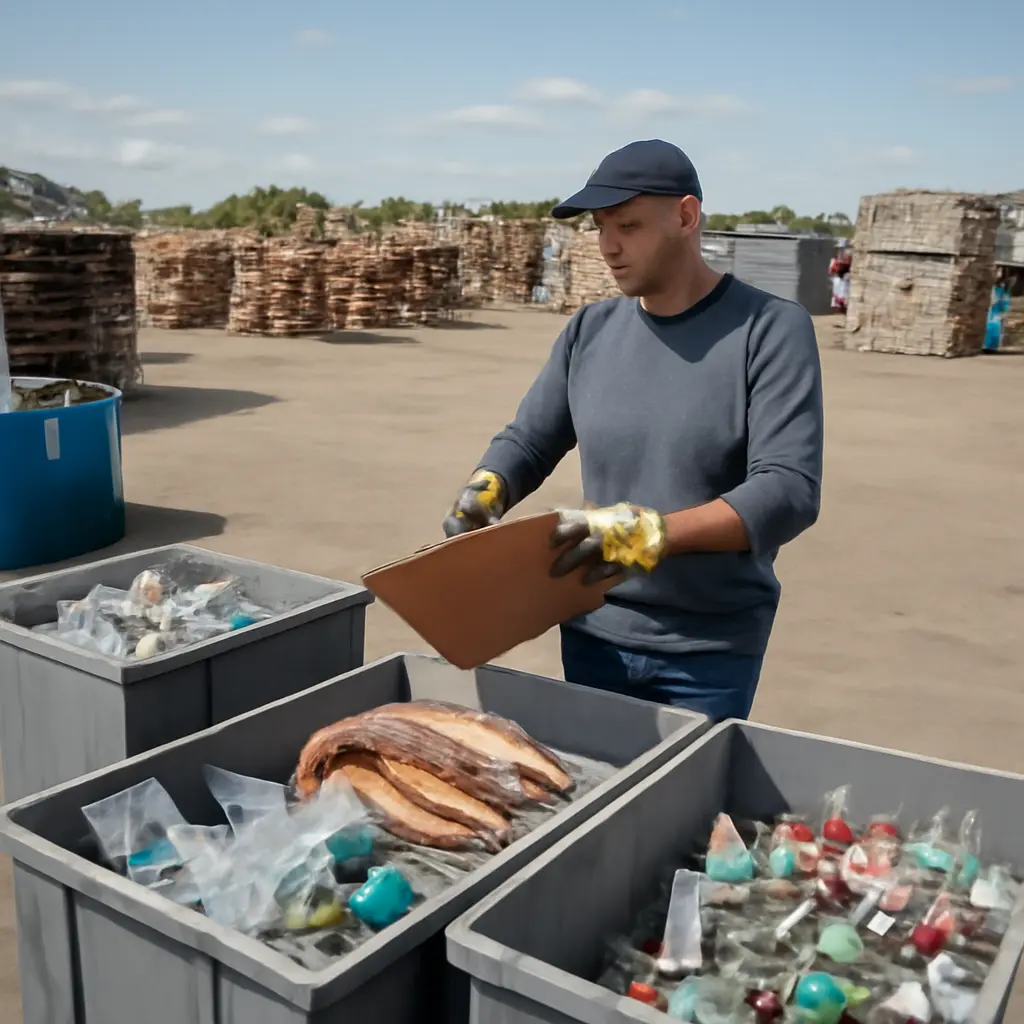
The untapped business potential hiding in Africa’s waste sector
Africa’s waste sector is the network of people, services, infrastructure and businesses that collect, sort, treat and recover materials discarded by households, farms, businesses and industries. It is also a largely underdeveloped market: the World Bank’s 2018 “What a Waste 2.0” report estimated that sub-Saharan Africa generated 174 million tonnes of municipal solid waste that year and collected only about 44% of it. That gap creates urgent public-health and environmental risks—and opportunities for businesses in collection, recycling, composting, reuse, waste-to-energy and digital services. The strongest prospects depend on reliable feedstock, viable markets for recovered materials, fit-for-purpose infrastructure and policies that bring informal workers into safer, more productive systems.
The waste sector defines an overlooked African business opportunity
The “waste sector” is not a single industry. It spans the chain from waste prevention and collection to sorting, processing, reuse, recycling and final disposal. The United Nations Environment Programme (UNEP) describes integrated waste management as a system that considers waste prevention, collection and treatment together, rather than treating disposal as the only endpoint. In business terms, this means value can be created both by managing waste safely and by turning discarded materials into products, services or energy.
The opportunity is significant, but the scale of the challenge should not be confused with guaranteed commercial returns. The World Bank projected that waste generation in sub-Saharan Africa could reach 269 million tonnes annually by 2030 under its 2018 business-as-usual scenario. That projection is not a current measurement; it illustrates the expected direction of pressure as cities grow, consumption changes and services struggle to keep pace. A viable enterprise still needs dependable customers, appropriate technology, predictable regulation and a route to market for its outputs.
Collection and logistics: turning an unmet service need into a business
Waste collection businesses move material from homes, markets, offices and factories to sorting or treatment sites. They may serve municipal contracts, commercial customers or individual households through subscriptions and pay-as-you-throw services. In underserved neighborhoods, locally operated collection can fill gaps left by overstretched public systems, particularly where roads, settlement patterns or limited public budgets make conventional truck routes difficult.
The World Bank’s estimate that only about 44% of waste in sub-Saharan Africa was collected in 2018 points to a major service deficit, but low collection coverage does not automatically mean customers can afford a new service. Operators need to test willingness to pay, route density, fuel costs, payment reliability and the distance to transfer or processing sites. Partnerships with municipalities, property managers, market associations and employers can help aggregate demand and reduce the cost of reaching each customer.
Recycling and materials recovery: value depends on quality and buyers
Recycling businesses sort and process materials such as plastics, paper, metals and glass so that manufacturers can use them as feedstock. Materials recovery facilities, neighborhood buy-back centers and specialized processors are different models within this category. Their performance depends on collection quality, separation at source, contamination rates, processing capacity and the price buyers will pay for recovered materials.
A useful example is PETCO South Africa, a producer-responsibility organization established by the plastics industry to support post-consumer PET collection and recycling. Its model illustrates how brand owners, recyclers, collectors and policy mechanisms can help build a market around one material stream. It also highlights a key commercial lesson: a recycling facility is not sustainable simply because a city produces waste. Investors should secure supply agreements and credible offtake arrangements before committing to equipment and processing capacity.
Organic waste and compost: linking cities with agriculture
Organic waste includes food scraps, market residues, garden waste and other biodegradable material. Composting converts suitable organic matter into soil amendments, while anaerobic digestion produces biogas and digestate under controlled conditions. These approaches can reduce the quantity of waste sent to dumpsites and create products for agriculture, landscaping or energy users.
The business case depends on separating organics from plastics and other contaminants, locating treatment close to feedstock and finding customers for the outputs. Market associations, food processors, hotels and produce markets can provide concentrated supply, while farms and landscaping businesses may become buyers. UNEP’s Global Waste Management Outlook 2024 emphasizes the need to move from waste disposal toward circular resource use; in practice, that transition requires product standards, buyer confidence and clear rules for using compost or digestate.
These established service and recovery models create the foundation for newer opportunities. Where material flows are difficult to track or infrastructure is costly to finance, digital tools and decentralized systems can help connect customers, workers, investors and processors.
Circular economy businesses can extend the value of African waste
A circular economy aims to keep products and materials in use for as long as possible through prevention, repair, reuse, remanufacturing and recycling. The Ellen MacArthur Foundation describes circularity as an approach that designs out waste and pollution, keeps products and materials circulating, and regenerates natural systems. Applied to African waste businesses, this shifts the focus from collecting ever more material toward preventing avoidable waste and retaining value locally.
Reuse, repair and refill models
Reuse businesses extend the life of goods through repair, resale, refurbishment, refill or return systems. Examples include repair services for electronics and appliances, reusable packaging pools, bottle-return schemes and second-hand marketplaces. These models can be less capital-intensive than industrial recycling because they preserve more of a product’s original value, although they still require dependable logistics, quality control and customer trust.
For packaging, deposit-return or take-back systems can reward consumers for returning containers and help businesses recover materials in better condition. Producers and retailers may support such systems to meet packaging commitments or reduce material costs. The practical test is whether the return network is convenient, the refund or incentive is meaningful, and the recovered items have a reliable next use.
Waste-to-energy: a targeted option, not a universal solution
Waste-to-energy covers technologies that produce heat, electricity or fuel from waste, including anaerobic digestion of organic materials and thermal treatment of residual waste. These technologies can serve particular applications, but they require careful assessment of waste composition, moisture, emissions controls, operating skills, financing and energy buyers. They are not interchangeable, and a project’s economics depend on local conditions.
The World Bank has cautioned through its waste-management guidance that disposal and treatment choices should reflect local waste composition and institutional capacity. In many African cities, mixed waste contains substantial biodegradable material and moisture, which can affect the performance of some thermal technologies. Project developers should prioritize waste prevention and recycling, assess environmental and social impacts, and avoid contracts that make facilities dependent on ever-increasing volumes of waste.
Digital platforms and data services
Digital waste businesses use mobile applications, route-planning software, weighing systems, traceability tools and marketplaces to coordinate collection and material sales. They can help customers book pickups, help collectors find nearby demand and give municipalities or producers better information about waste flows. Data can also support performance-based contracts and make it easier to verify collection or recycling claims.
Technology is an enabler rather than a substitute for physical infrastructure. A platform needs enough collectors, customers and buyers in a service area to create useful network effects. Businesses should also account for smartphone access, connectivity, digital payments, data protection and the needs of workers who may not use formal digital systems. Simple tools that solve a specific operational problem can be more effective than a complex application without dependable local participation.
Informal waste workers are essential partners in sector growth
Informal waste workers include waste pickers, itinerant buyers, neighborhood collectors and small-scale recyclers operating outside or alongside formal municipal systems. The International Labour Organization (ILO) and the United Nations Environment Programme have documented the importance of informal workers in collecting and recovering materials in many developing-country cities. Their local knowledge, networks and labor already support recycling markets, even when work is insecure and poorly protected.
Integration can improve livelihoods and business performance
Integrating informal workers means recognizing their contribution and designing contracts, cooperatives, service agreements or supplier relationships that improve safety and income while strengthening material recovery. Businesses can provide protective equipment, fair purchasing terms, predictable payment, training and access to sorting sites. Municipalities can include worker organizations in consultations and service tenders rather than removing existing livelihoods without alternatives.
The commercial benefit can be practical: established collectors may know where valuable materials are generated, how to reach difficult locations and which buyers accept different grades. However, integration should not be treated as unpaid outsourcing. Transparent weighing, clear quality standards, timely payment and safe working conditions are essential to building lasting partnerships.
Health, safety and inclusion are part of the operating model
Waste work can expose people to sharp objects, hazardous substances, traffic, smoke and biological risks. A responsible business model includes training, protective equipment, safe facilities and procedures for handling hazardous or electronic waste. It should also consider barriers faced by women and young workers, including unequal pay, harassment, limited access to equipment and exclusion from decision-making.
The ILO’s approach to a just transition stresses that environmental change should create decent work and address social impacts. For waste businesses, this means measuring more than tonnes collected: track worker earnings, injury rates, contract stability and access to social protection alongside environmental results. These indicators can also help investors and public agencies distinguish credible impact from unsupported claims.
Policy, finance and infrastructure determine whether opportunity becomes viable
Waste-sector growth depends on public rules and investment as much as entrepreneurial ideas. Municipal governments influence service concessions, land access, collection standards and disposal fees; national governments shape environmental regulation, taxes, imports and producer-responsibility rules. Where responsibilities are unclear or enforcement is inconsistent, businesses face uncertainty over who pays, what standards apply and whether recovered materials can compete with virgin inputs.
Extended producer responsibility can create predictable funding
Extended producer responsibility (EPR) makes producers responsible, financially or operationally, for products and packaging after use. It can help fund collection, sorting and recycling, especially for packaging and electronic waste. The OECD’s guidance on EPR identifies clear roles, transparent cost allocation, measurable targets and effective oversight as important design features.
For businesses, a well-designed EPR system can create more predictable demand for recovery services. Weak systems, by contrast, may collect fees without delivering measurable outcomes or may favor a narrow set of operators. Policymakers should publish performance data, ensure that funds reach collection and recovery activities, and include informal-sector participants where appropriate.
Blended finance and municipal partnerships
Waste infrastructure often requires upfront capital for vehicles, transfer stations, sorting lines, composting facilities and sanitary landfills. Revenue may be uncertain because service fees are difficult to collect and commodity prices fluctuate. Blended finance combines public, philanthropic or development funding with private investment to reduce risks or fund public benefits that a business cannot fully monetize.
Municipal partnerships can provide access to customers, land, waste streams or service payments, while businesses contribute operational expertise and investment. Contracts should clearly specify service areas, payment terms, performance measures, risk allocation and dispute resolution. Before financing a facility, investors should test feedstock quantity and quality, operating costs, customer affordability, offtake demand and the municipality’s capacity to honor agreements.
Landfills, dumpsites and environmental safeguards
Uncontrolled dumpsites can create environmental and health risks through fires, contaminated runoff, air pollution and unsafe working conditions. Sanitary landfills are engineered disposal sites with controls such as managed access, waste placement, leachate management and, where appropriate, gas collection. They remain necessary for residual waste that cannot currently be prevented or recovered, but should not displace better options for reusable and recyclable materials.
The World Bank’s What a Waste 2.0 report estimated that the world generated 2.01 billion tonnes of municipal solid waste in 2016 and projected 3.40 billion tonnes by 2050. These are global estimates, not Africa-only figures, and reflect the report’s modeled scenario. They underscore why cities need both expanded basic services and a long-term shift toward waste prevention, recovery and environmentally sound disposal.
A practical roadmap for building a waste-sector business
The strongest ventures start with a clearly defined local problem rather than a technology looking for material. Africa’s countries and cities differ in waste composition, purchasing power, infrastructure and regulation, so business models should be validated market by market.
- Map the material stream: measure where waste is generated, what it contains, who currently collects it and how much is recoverable.
- Validate buyers and customers: confirm demand and acceptable quality for recovered materials, compost, energy or collection services before investing in capacity.
- Build a dependable operating network: work with municipalities, businesses, community groups and informal workers to secure access and reliable supply.
- Design for local economics: test collection density, transport distance, energy needs, maintenance, customer affordability and commodity-price volatility.
- Meet legal and environmental requirements: clarify permits, land use, worker protections, emissions controls and producer-responsibility obligations.
- Track results transparently: report service coverage, tonnes recovered, contamination, worker conditions, emissions where measurable and financial performance.
A useful illustration for readers is a simple value-chain diagram showing waste generation, collection, sorting, processing, buyers and residual disposal. A companion chart could compare the estimated 44% collection rate in sub-Saharan Africa in 2018 with the region’s projected 269 million tonnes of waste generation by 2030 in the World Bank’s business-as-usual scenario. The chart should label the dates clearly and identify the projection as a scenario, not an observed outcome.
Conclusion: build businesses that solve service gaps and retain value
Africa’s waste sector combines a basic service challenge with a substantial resource-recovery opportunity. Collection and logistics can close service gaps; recycling and organic-waste businesses can return materials to productive use; circular models can extend product life; and digital tools can improve coordination. Informal workers are already part of this value chain, while policy, finance and infrastructure determine whether businesses can operate reliably and responsibly.
The opportunity is not a license to treat every tonne of waste as profitable. Durable ventures need verified supply, real buyers, sound unit economics, environmental safeguards and fair partnerships. Entrepreneurs can begin by mapping one local material stream and testing a focused service; investors can demand credible feedstock and offtake evidence; and policymakers can improve collection, enforce transparent EPR systems and include workers in planning. Together, those steps can turn waste management from an overlooked cost into a more inclusive engine of urban health, employment and circular economic growth.
Sources: World Bank, What a Waste 2.0: A Global Snapshot of Solid Waste Management to 2050, 2018, https://openknowledge.worldbank.org/handle/10986/30317; United Nations Environment Programme, Global Waste Management Outlook 2024, https://www.unep.org/resources/global-waste-management-outlook-2024; Ellen MacArthur Foundation, What Is a Circular Economy?, https://www.ellenmacarthurfoundation.org/topics/circular-economy-introduction/overview; PETCO South Africa, About PETCO, https://petco.co.za/about-us/; International Labour Organization, Decent Work in the Management of Electrical and Electronic Waste (E-Waste), https://www.ilo.org/publications/decent-work-management-electrical-and-electronic-waste-e-waste; Organisation for Economic Co-operation and Development, Extended Producer Responsibility: Updated Guidance for Efficient Waste Management, 2016, https://doi.org/10.1787/9789264256385-en.