Where Cities Should Begin with Low Emission Vehicle Fleets
Low-emission vehicle fleets are groups of vehicles that produce less greenhouse-gas and air-pollution emissions than conventional vehicles, through electrification or other lower-emission technologies. Cities should generally begin with high-mileage, centrally managed vehicles that return to depots regularly—especially buses, municipal service vehicles, and delivery fleets—because their predictable routes and parking make charging easier and their frequent operation can deliver substantial emissions and public-health benefits. The U.S. Environmental Protection Agency (EPA) estimates that transportation produced 28% of U.S. greenhouse-gas emissions in 2022, while the International Council on Clean Transportation (ICCT) reports that buses and trucks account for a disproportionate share of road-transport pollution. Prioritizing fleet segments by mileage, exposure, operational fit, and total cost helps cities turn those opportunities into practical procurement plans.
Cities should target high-use fleets first for low-emission vehicles
A low-emission vehicle fleet is not simply a collection of newer or more fuel-efficient vehicles. It is a planned group of vehicles, supporting infrastructure, and operating practices intended to reduce emissions over the vehicles’ service lives. The U.S. Department of Energy’s Alternative Fuels Data Center (AFDC) identifies battery-electric, plug-in hybrid, and fuel-cell vehicles among the alternative-fuel options that can reduce petroleum use and, depending on their energy source, greenhouse-gas emissions.
The best starting point is usually the fleet segment where the city can combine high annual mileage with reliable overnight parking, repeatable routes, and centralized purchasing. These characteristics make municipal vehicles and transit buses strong early candidates, while school buses, refuse trucks, and contracted delivery fleets may offer compelling local benefits when route and charging conditions align. A 2023 ICCT analysis found that heavy-duty vehicles made up about 10% of vehicles on the road globally but contributed a large share of road-transport carbon dioxide emissions, underscoring why fleet decisions should look beyond passenger cars.
Begin with an emissions and duty-cycle inventory
A fleet inventory records vehicle type, age, fuel, annual mileage, fuel consumption, routes, idle time, maintenance, and replacement date. A duty cycle describes how a vehicle is actually used: daily distance, stops, loads, time parked, and access to charging or fueling. Together, these data help cities compare emissions reductions and operational feasibility rather than selecting vehicles by purchase price alone.
The U.S. Department of Energy’s Alternative Fuels Data Center recommends assessing vehicle requirements and infrastructure before choosing alternative-fuel vehicles. Cities can rank candidate vehicles by annual fuel use, local pollution exposure, predictability of return-to-base, and proximity to a scheduled replacement. This avoids premature replacement of serviceable vehicles and highlights high-mileage units whose fuel savings can accrue quickly.
Use total cost of ownership, not sticker price alone
Total cost of ownership includes the purchase price, incentives, charging or fueling equipment, electricity or fuel, maintenance, financing, and end-of-life value. Battery-electric vehicles often cost more upfront than comparable combustion vehicles, but may have lower energy and maintenance costs; the balance depends on electricity prices, vehicle utilization, duty cycle, and infrastructure expenses. The National Renewable Energy Laboratory’s fleet analyses emphasize that utilization and charging strategy materially affect the economics of electrification.
A sound business case tests multiple scenarios, including electricity tariffs, demand charges, vehicle life, battery replacement assumptions, and grant availability. It should also count nonfinancial outcomes, such as reduced tailpipe pollution near schools or depots, quieter streets, and progress toward municipal climate targets.
Municipal service fleets offer a practical first deployment
Municipal service fleets include cars, vans, and light- or medium-duty vehicles operated by departments such as public works, parks, inspections, and administration. They are often promising early candidates because the city controls procurement, can coordinate vehicles and depots, and can learn from real-world operations before scaling to more complex fleets.
Electrify predictable light-duty vehicles and vans
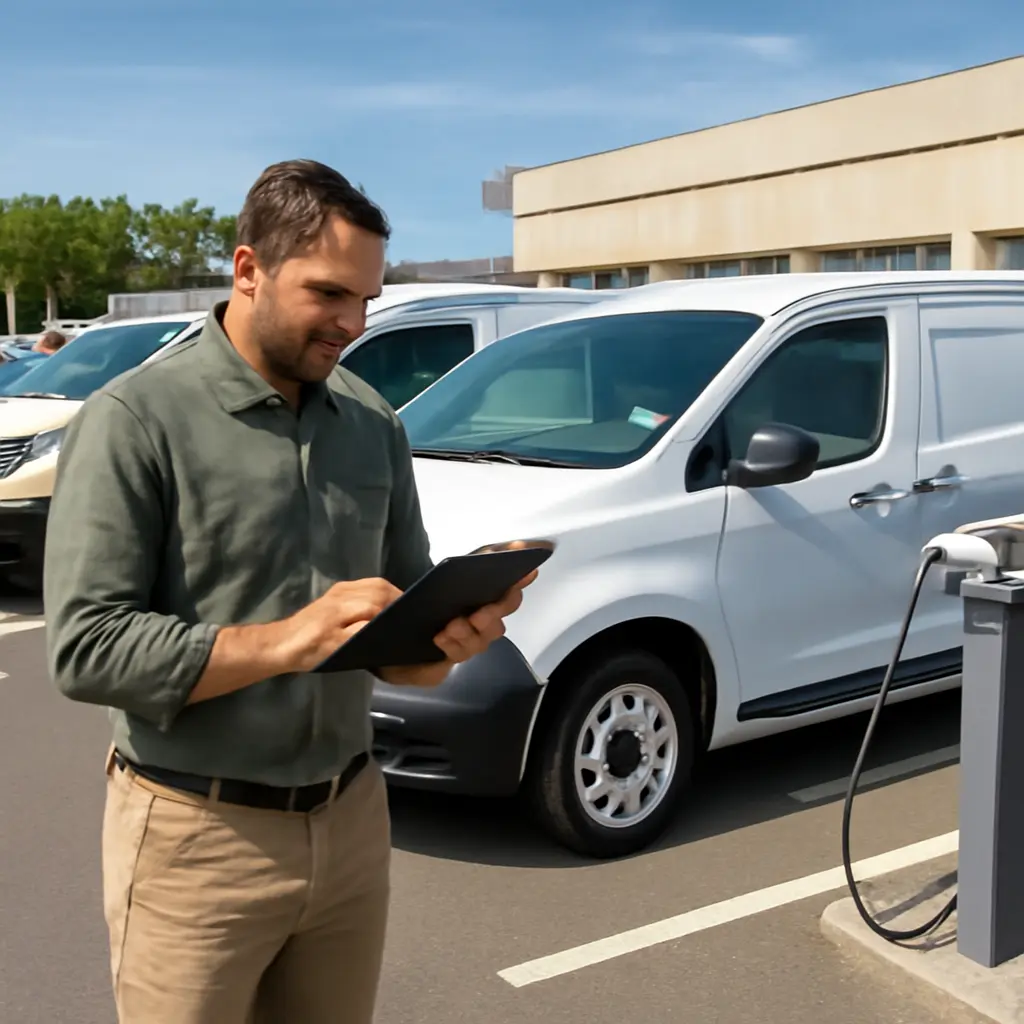
Pool cars, inspection vehicles, parking-enforcement vehicles, and many service vans have repeatable daily travel and return to municipal facilities. These patterns can support overnight charging and reduce the need for expensive public fast-charging. The U.S. General Services Administration has reported that electric vehicles can have lower fuel and maintenance costs in suitable applications, though results vary with local energy prices and use.
Cities should verify winter range, payload, accessory loads, and emergency-response needs before assigning an electric vehicle to a route. For vehicles that operate continuously or travel long distances, a hybrid or another lower-emission option may be a transitional fit until charging access and vehicle availability improve.
Pair vehicles with depot charging and smart operations
Depot charging means charging vehicles at a city-owned or contracted parking site, usually while vehicles are off duty. Smart charging coordinates charging times and power to meet departure requirements while managing electricity costs and limiting simultaneous peak demand. The U.S. Department of Energy notes that charging infrastructure planning should account for vehicle schedules, grid capacity, utility coordination, and future fleet growth.
A phased approach can install chargers first for vehicles with the clearest operational fit, while the city works with its utility on service upgrades and expansion. Shared chargers, telematics, and clear parking procedures can improve utilization and reduce the risk that vehicles are unavailable when needed.
Transit buses deliver high public-health and climate value
Transit buses are a particularly visible fleet category because they accumulate substantial mileage and operate in dense neighborhoods. Battery-electric buses eliminate tailpipe emissions during operation, while their full climate impact depends on electricity generation and vehicle production. The Federal Transit Administration’s Low or No Emission Grant Program supports transit agencies acquiring low- and no-emission buses and the facilities needed to operate them.
Prioritize routes with strong electric-bus fit
Route suitability depends on distance, terrain, passenger loads, heating and cooling demand, layover time, and charging access. Agencies can begin with routes that return to a depot, have manageable daily mileage, or provide scheduled layovers suitable for charging. Pilot deployments should measure energy use across seasons and service conditions before expanding procurement.
The International Energy Agency reported that the global electric-bus stock exceeded 700,000 in 2023, with China accounting for the majority. This scale demonstrates that electric buses are already deployed widely, but city-specific planning remains essential because climate, route structure, and grid conditions differ.
Plan charging, maintenance, and service continuity together
Bus electrification requires more than replacing vehicles: agencies must plan charger placement, electrical capacity, backup arrangements, staff training, and maintenance facilities. Charging schedules should preserve reliable service during peak periods and account for reduced battery range in cold weather or on demanding routes.
A useful pilot establishes baseline diesel consumption, maintenance costs, vehicle availability, energy use, and on-time performance. Comparing these indicators with electric-bus results allows the agency to refine routes, charging plans, and procurement specifications before expanding the program.
School buses and refuse trucks can address concentrated exposure
School buses and refuse trucks are heavy-duty vehicles that often operate near homes, schools, and other sensitive locations. Their repeated routes and concentrated operating areas can make them strong candidates for emissions reductions, but payload, schedule, and charging requirements must be assessed carefully.
School buses reduce pollution around children
Electric school buses produce no tailpipe emissions while driving and can reduce diesel exhaust exposure around schools and bus stops. The U.S. Environmental Protection Agency’s Clean School Bus Program was authorized with $5 billion over fiscal years 2022–2026 to replace existing school buses with cleaner models, including zero-emission buses. Funding and eligibility can change by program round, so districts should check current federal and state requirements.
School-bus planning should consider morning and afternoon route lengths, midday parking, seasonal heating demand, and whether vehicles can provide grid services while parked. Districts also need charging plans that do not interfere with school calendars or transportation availability.
Refuse trucks combine stop-and-go operation with high energy needs
Refuse trucks make frequent stops, idle during collection, and return to depots, making them operationally distinct from long-haul trucks. Electric drivetrains can be well suited to stop-and-go routes, but heavy loads, hydraulic equipment, long shifts, and route variability can raise energy demand. Cities should use route-level data and payload measurements to identify suitable collection zones and validate range under real conditions.
Because refuse trucks are costly and essential, a limited pilot should include backup vehicles, technician training, and clear service-continuity procedures. Where full electrification is not yet practical, cities can still reduce emissions through anti-idling policies, efficient routing, and cleaner replacement vehicles.
Commercial and delivery fleets extend city impact beyond government vehicles
Commercial fleets—including parcel delivery, taxis, ride-hailing, and contracted service vehicles—can contribute substantially to urban traffic and emissions. Cities do not always own these vehicles, but they can influence deployment through procurement contracts, curb rules, charging access, permitting, and partnerships with employers and utilities.
Target high-mileage delivery and taxi vehicles
Vehicles that travel many miles per day can produce large cumulative emissions, so electrifying them may yield more benefit per vehicle than starting with low-use cars. Delivery vans and taxis often have centralized operators, predictable overnight parking, or recurring service areas that can support charging plans. Cities should engage operators early to understand vehicle availability, financing barriers, and depot constraints.
Public-private programs can combine charging hubs, preferential access to suitable loading areas, technical assistance, and fleet procurement commitments. Equity safeguards matter: charging investments and cleaner vehicles should serve neighborhoods experiencing high pollution, not only commercially attractive districts.
Use procurement and curb policy to influence contractors
Cities can include emissions performance, anti-idling requirements, and vehicle reporting in contracts for waste collection, shuttles, maintenance, and deliveries. Curbside policies can support cleaner fleets through designated loading zones or managed access, provided rules are transparent and do not unfairly burden small businesses.
Contract requirements should be phased and tied to realistic vehicle availability, charging access, and contract renewal dates. A city can begin by requiring fuel and mileage reporting, then set progressively stronger standards as suitable vehicles and infrastructure become available.
Charging infrastructure and equity determine whether fleets can scale
Charging infrastructure is the equipment, electrical service, software, and site planning needed to supply vehicles with power. Its location and design affect whether a fleet can operate reliably and whether residents and workers share the benefits. Infrastructure planning should therefore proceed alongside vehicle procurement, not after it.
Coordinate with utilities before buying vehicles
Utility coordination identifies available electrical capacity, upgrade timelines, tariff options, and opportunities to manage peak demand. The National Renewable Energy Laboratory’s Electric Vehicle Infrastructure Projection Tool can help estimate charging needs under different vehicle adoption scenarios. Cities should confirm site-specific requirements with their utility and electrical engineers, since modeled estimates do not replace engineering studies.
A charging plan should distinguish depot charging, workplace charging, public charging, and opportunity charging during routes. It should also include resilience measures for outages, future capacity for fleet growth, and accessible charging for any public-facing facilities.
Direct investment toward communities with greater pollution burdens
Fleet electrification can reduce tailpipe pollution where vehicles operate, but benefits are not evenly distributed unless cities deliberately account for exposure and access. The EPA’s EJScreen tool provides environmental and demographic indicators that can help identify communities facing multiple burdens, though it is a screening tool rather than a substitute for local engagement or detailed health analysis.
Cities should publish where vehicles and chargers will be deployed, consult residents and workers, and track whether cleaner routes serve neighborhoods with high traffic pollution. They should also consider workforce impacts, including technician training and fair access to new fleet-maintenance jobs.
A phased procurement plan turns priorities into measurable results
A phased plan links vehicle replacement, infrastructure, funding, and performance measurement. Instead of committing to a single technology for every use, cities can select the lowest-emission option that reliably meets each duty cycle and update decisions as vehicles, electricity systems, and costs evolve.
Sequence assessment, pilots, and scale-up
- Build a verified inventory of vehicles, routes, mileage, fuel use, costs, and replacement dates.
- Rank fleet segments by emissions, public exposure, operational fit, and total cost of ownership.
- Coordinate with utilities and facility managers to assess charging sites and upgrade schedules.
- Run pilots across representative routes and seasons, with backup plans for essential services.
- Use measured performance to revise specifications, contracts, infrastructure, and scale-up targets.
Track emissions, reliability, cost, and equity
Useful indicators include tailpipe and lifecycle emissions, fuel or electricity use per mile, vehicle availability, maintenance cost, route completion, charging utilization, and cost per mile. Cities should also track deployment by neighborhood and service type, plus workforce training and access to charging. Consistent reporting makes it possible to distinguish genuine improvements from changes caused by mileage, weather, or route assignments.
A chart in the city’s fleet plan can compare candidate segments across annual mileage, estimated emissions, charging readiness, and replacement timing. A second chart can show annual progress against a baseline for emissions, operating cost, and service reliability. These visuals make trade-offs easier for elected officials and the public to evaluate.
Conclusion: Start where mileage, readiness, and public benefit overlap
Cities should begin low-emission fleet transitions with high-use vehicles that follow predictable routes and return to depots—often municipal light-duty vehicles, transit buses, and selected school buses or delivery fleets. Fleet inventories and total-cost analysis identify viable candidates; charging and utility planning make deployment reliable; equity-focused siting helps direct cleaner air benefits to overburdened communities; and phased procurement limits operational risk.
The broader implication is that fleet policy can reduce climate pollution while improving local air quality, but only if cities measure real-world performance and plan infrastructure and services together. Municipal leaders should begin with a transparent fleet audit, consult workers and affected neighborhoods, coordinate with utilities, and publish measurable milestones for the next procurement cycle.
Sources: U.S. Environmental Protection Agency, Inventory of U.S. Greenhouse Gas Emissions and Sinks: 1990–2022, https://www.epa.gov/ghgemissions/inventory-us-greenhouse-gas-emissions-and-sinks; International Council on Clean Transportation, Global Overview of Zero-Emission Heavy-Duty Vehicles: 2023 Update, https://theicct.org/publication/global-ze-hdv-2023-update-jun24/; U.S. Department of Energy, Alternative Fuels Data Center, https://afdc.energy.gov/; National Renewable Energy Laboratory, Fleet DNA: Commercial Fleet Vehicle Operating Data, https://www.nrel.gov/transportation/fleettest-fleet-dna.html; U.S. General Services Administration, Electric Vehicles, https://www.gsa.gov/buy-through-us/products-and-services/transportation-and-logistics-services/fleet-management/electric-vehicles; Federal Transit Administration, Low or No Emission Grant Program, https://www.transit.dot.gov/lowno; International Energy Agency, Global EV Outlook 2024, https://www.iea.org/reports/global-ev-outlook-2024; U.S. Environmental Protection Agency, Clean School Bus Program, https://www.epa.gov/cleanschoolbus; National Renewable Energy Laboratory, Electric Vehicle Infrastructure Projection Tool, https://www.nrel.gov/transportation/evi-pro.html; U.S. Environmental Protection Agency, EJScreen: Environmental Justice Screening and Mapping Tool, https://www.epa.gov/ejscreen.