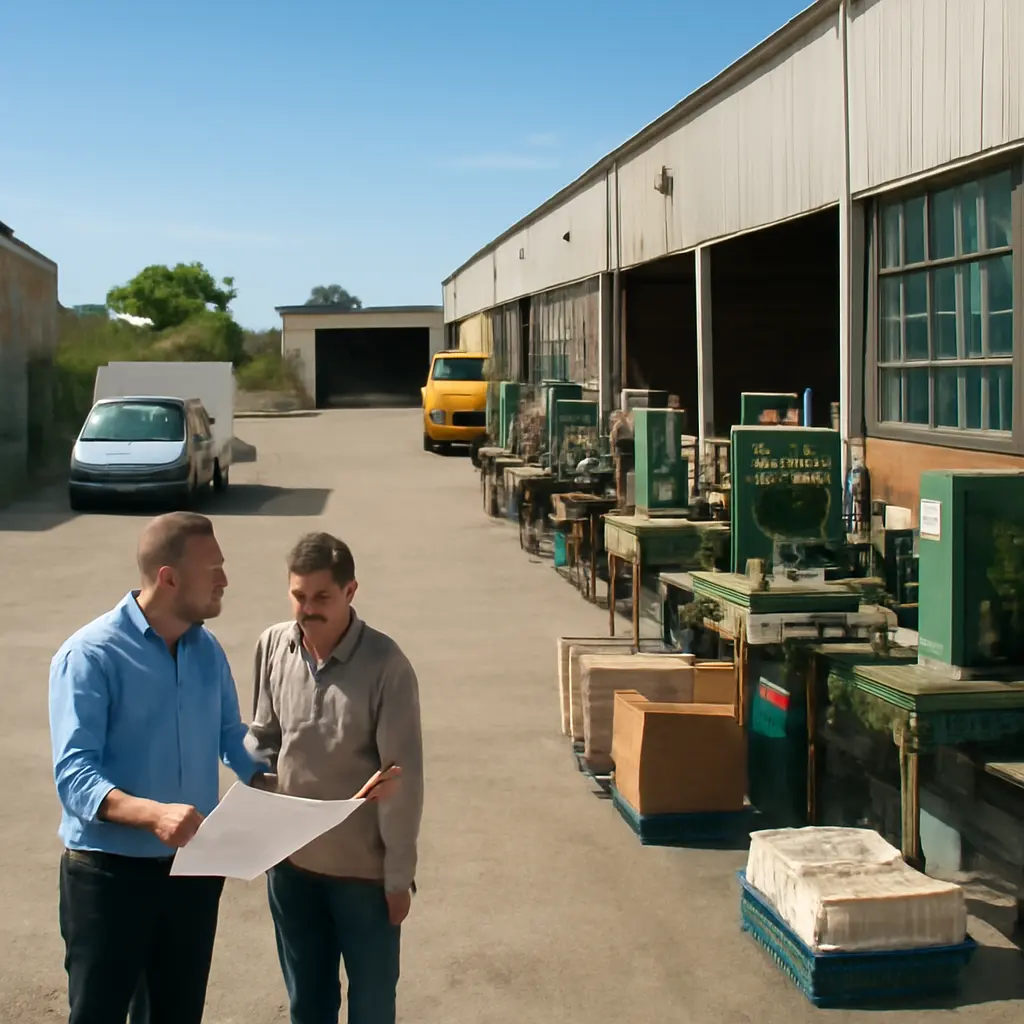
Building industrial value chains from scratch across Africa
Building industrial value chains from scratch across Africa means creating the connected capabilities that turn local resources, skills, and ideas into competitive products—from reliable energy and transport to processing, suppliers, finance, standards, and markets. The opportunity is substantial: the African Development Bank estimates that the continent’s infrastructure financing needs are about $130–$170 billion annually, while the African Continental Free Trade Area (AfCFTA) creates a potential market of roughly 1.3 billion people. Success, however, depends less on building isolated factories than on coordinating infrastructure, skills, policy, investment, and regional demand. This article explains the value-chain concept, the foundations required to build one, practical approaches to sequencing investment, lessons from African examples, and ways to measure results.
How industrial value-chain development works across Africa
An industrial value chain is the linked set of activities that moves an input through production, processing, distribution, and sale, while adding value at each stage. The United Nations Industrial Development Organization (UNIDO) describes value-chain development as improving the performance and relationships of actors across connected stages, rather than focusing on a single firm or factory. In practice, a chain may include farmers or miners, input suppliers, processors, packaging firms, logistics companies, financiers, regulators, wholesalers, and customers.
For African economies, building a chain “from scratch” rarely means starting with no assets. It means identifying what exists, addressing missing links, and coordinating investments so that local production can compete on cost, quality, reliability, and delivery time. This matters because the World Bank has estimated that Africa’s manufacturing value added remains a modest share of its economy, while the continent continues to export many commodities with limited processing. Industrial value chains can expand productive employment, diversify exports, build supplier capabilities, and make regional trade more resilient.
The idea has several related forms: a domestic value chain links producers and buyers within one country; a regional value chain distributes production across neighboring countries; a global value chain connects African suppliers to international lead firms; and a resource-based value chain processes agricultural, mineral, or energy inputs locally. These categories overlap. A battery-materials chain, for example, might source minerals in one country, process them in another, and supply vehicle or energy-storage manufacturers across the region.
Why Africa needs connected industrial foundations
A value chain is only as dependable as its weakest critical link. A modern processing plant cannot operate competitively if power interruptions halt production, roads delay inputs, customs procedures hold up shipments, or testing facilities cannot verify product standards. The African Development Bank’s infrastructure-financing estimate—about $130–$170 billion per year, with a financing gap of roughly $68–$108 billion—signals the scale of the enabling-investment challenge.
Market access is another foundation. The AfCFTA’s stated ambition is to create a single African market encompassing around 1.3 billion people and a combined GDP of approximately $3.4 trillion. The United Nations Economic Commission for Africa has projected that full implementation could raise intra-African trade significantly, especially in industrial goods. These gains are not automatic: firms need harmonized rules of origin, workable border systems, logistics services, and predictable implementation to sell across borders.
Human capabilities are equally important. Industrialization requires technicians, production managers, maintenance specialists, quality-control staff, engineers, and entrepreneurs who can meet customer specifications consistently. The International Labour Organization emphasizes that skills development works best when training is connected to real employer demand. This means designing curricula with firms, supporting apprenticeships, and building practical learning into investment plans rather than treating workforce development as a later add-on.
Infrastructure and industrial utilities
Industrial infrastructure includes electricity, water, roads, rail, ports, digital connectivity, and serviced land. Reliable utilities often matter more than headline capacity: a factory needs power at a predictable price and quality, not simply a national generation target. Industrial parks and special economic zones can concentrate infrastructure and services, but they deliver value only when connected to workers, suppliers, and markets. The World Bank’s special economic zone guidance stresses that zones should be integrated with the wider economy rather than operate as isolated enclaves.
Planning should therefore begin with the operating requirements of target industries. Food processing may need dependable water, cold storage, and waste treatment; mineral refining may require high-capacity electricity and environmental safeguards; pharmaceuticals need validated utilities and controlled production environments. Shared infrastructure can reduce costs for smaller firms, while transparent tariffs and maintenance plans help ensure that assets remain usable after construction.
Skills, technology, and supplier development
Supplier development is the process of helping local firms meet the price, quality, volume, and delivery requirements of industrial buyers. It may involve technical audits, equipment upgrades, management coaching, access to finance, and long-term purchasing agreements. The African Development Bank and UNIDO have both highlighted the importance of productive capabilities—technology, managerial know-how, standards, and firm-level learning—in moving from commodity dependence toward higher-value production.
Training should be linked to specific production tasks and job pathways. A food-processing cluster, for instance, may need maintenance technicians, food-safety specialists, packaging operators, and laboratory staff. Partnerships among firms, vocational institutes, universities, and public agencies can align training with these requirements. Technology transfer also works best when accompanied by local adaptation, repair capacity, and opportunities for African engineers and firms to improve processes over time.
Finance, standards, and predictable regulation
Industrial investment typically requires patient capital because plants, supplier networks, and infrastructure take time to become commercially viable. Local banks may be reluctant to finance long-maturity projects, while smaller suppliers often lack collateral or a track record. Development finance institutions, commercial lenders, public procurement, guarantees, and blended finance can help share risk, but support should be tied to transparent performance targets and a credible path to competitiveness.
Standards and conformity assessment are the systems that demonstrate whether products meet safety, technical, and buyer requirements. Without accredited testing laboratories, certification services, and clear regulatory procedures, firms may struggle to access regional or export markets. The AfCFTA’s rules of origin are also important: they determine which products qualify for preferential tariff treatment and can influence where companies source inputs and locate processing. Predictable rules and consistent customs administration reduce uncertainty for investors and producers.
How to sequence investment and build a viable chain
A practical industrial strategy starts with market demand and works backward through the chain. Governments and investors should identify products with credible buyers, assess whether local or regional inputs can meet required specifications, and determine which missing capabilities prevent firms from supplying those buyers. This is more effective than selecting industries solely because a country has a resource or announcing a factory before confirming its market, input supply, and operating economics.
Map the chain and select realistic entry points
Value-chain mapping identifies actors, costs, bottlenecks, ownership, standards, and market relationships from input to end customer. It should distinguish activities that can be competitive now from those requiring foundational investments or regional cooperation. A country may be better positioned to begin with packaging, maintenance, food ingredients, or component assembly than with a capital-intensive final product. The aim is to select an entry point that creates learning and supplier opportunities while meeting actual demand.
Selection criteria should include market size, import dependence, export prospects, local input availability, energy and water intensity, job quality, environmental impacts, and potential for technology learning. The World Bank’s work on economic complexity and structural transformation similarly points to the value of building capabilities that enable firms to move into more sophisticated products over time.
Coordinate anchor firms with local suppliers
An anchor firm is a large producer or buyer capable of creating stable demand for smaller suppliers and service providers. Anchors can help establish production standards, train suppliers, and justify shared infrastructure. But local linkages do not arise automatically: procurement systems may favor established overseas vendors, and small firms may be unable to finance equipment or meet certification requirements. Supplier databases, transparent tendering, supplier-upgrading programs, and prompt payment practices can help convert anchor investment into broader industrial capability.
Public support should be designed to generate additional activity rather than merely subsidize investments that would occur anyway. Measures can include time-limited tax incentives, workforce partnerships, infrastructure access, and co-financing for supplier upgrades. Governments should publish eligibility criteria and evaluate whether support leads to additional jobs, local procurement, exports, technology adoption, and productivity gains.
Use regional specialization rather than duplicating every stage
Regional value chains allocate different stages of production across countries according to capabilities, resources, and market access. This can broaden the scale available to firms while avoiding the cost of replicating every production stage in each national market. AfCFTA implementation can support such specialization if countries coordinate infrastructure, standards, customs processes, and rules of origin. Regional cooperation is especially relevant for industries that require large markets or complementary inputs, such as pharmaceuticals, automotive components, fertilizers, and renewable-energy equipment.
African examples of value-chain building
African experience shows that value-chain development is possible, but outcomes depend on institutions, market links, and long-term capability building. Projects are most instructive when assessed not only by installed capacity but also by local supplier participation, productivity, quality, environmental performance, and access to customers.
Ethiopia’s industrial parks and light manufacturing
Ethiopia used industrial parks to attract investment in sectors including garments, textiles, and agro-processing, pairing serviced sites with infrastructure and export-oriented policies. The experience demonstrated how coordinated land, utilities, and investor services can help launch manufacturing activity. It also highlighted challenges: competitiveness depends on reliable logistics, labor productivity, foreign-exchange access, supplier depth, and commercial demand. Parks should be judged by durable firm performance and domestic linkages, not only by the number of factories opened.
Rwanda’s coffee value chain
Rwanda’s coffee sector illustrates how quality upgrading and market positioning can increase value captured by producers. Investments in washing stations, quality control, cooperative organization, and export relationships have helped some producers access specialty markets. The case also shows that processing and branding require consistent quality, trusted certification, and reliable buyer relationships. Higher-value exports do not automatically translate into evenly distributed gains, so producer incomes and working conditions need to be monitored alongside export prices.
Morocco’s automotive supplier ecosystem
Morocco’s automotive industry has attracted vehicle manufacturers and a growing network of component suppliers, supported by ports, industrial zones, training, and trade access. The example demonstrates the value of connecting anchor investors with logistics and workforce systems. It also underscores a continuing challenge for African industrialization: increasing the technological depth and local ownership of suppliers, and ensuring that domestic firms can move from basic services into more complex components and engineering roles.
The Democratic Republic of the Congo and Zambia’s battery ambitions
The Democratic Republic of the Congo and Zambia have promoted cooperation around battery materials and electric-vehicle value chains, drawing on mineral resources and regional potential. The proposition is significant because processing and component production could retain more value than exporting unprocessed minerals. Yet a viable battery chain needs competitive power, transport, water management, skilled workers, technology partnerships, financing, and customers. Environmental and social safeguards—including responsible mining and meaningful community engagement—are essential to ensure that industrial upgrading creates broad benefits rather than shifting costs onto local communities.
Risks, safeguards, and measures of success
Industrial policy can fail when incentives protect inefficient firms indefinitely, when public investments are disconnected from demand, or when projects impose high fiscal and environmental costs. Other risks include foreign-exchange shortages, policy instability, weak competition, low-quality infrastructure maintenance, and climate exposure. A robust strategy should publish its objectives, disclose public support, review results regularly, and allow unsuccessful programs to be redesigned or ended.
Performance measurement should combine economic, social, and environmental indicators. Useful measures include manufacturing value added, labor productivity, export diversification, regional sales, local procurement, supplier survival, formal jobs, wages, skills certification, energy and water intensity, emissions, and compliance with labor and safety standards. The United Nations Sustainable Development Goal 9 provides a broader framework for inclusive and sustainable industrialization, but national dashboards should also track whether gains reach small firms, workers, women, and communities near production sites.
A chart accompanying this article could show the chain as a sequence—inputs, processing, components, assembly, logistics, and markets—with enabling layers for infrastructure, skills, finance, standards, and governance. A second chart could compare selected industries by market demand, local capabilities, infrastructure requirements, employment potential, and environmental risk. Such visuals would make clear that the strongest opportunities are those where demand and capabilities can be connected at an affordable cost.
Conclusion: build connections before counting factories
Building industrial value chains across Africa means linking producers, suppliers, infrastructure, skills, finance, standards, and markets into a dependable system. The continent’s infrastructure gap is large, but the AfCFTA offers a significant opportunity to build regional scale. African examples—from industrial parks and coffee upgrading to automotive suppliers and proposed battery cooperation—show both the potential and the conditions required for success: genuine demand, capable firms, predictable rules, reliable utilities, and local learning.
Governments, businesses, development institutions, and training providers should begin with careful chain mapping, choose feasible entry points, coordinate investment, and measure outcomes beyond construction and announcements. Further action should prioritize reliable power and logistics, supplier-development programs, skills partnerships, interoperable standards, transparent industrial incentives, and strong social and environmental safeguards. The central test is whether each investment helps African firms and workers become more productive, connected, and capable of competing in regional and global markets.
Sources: African Development Bank, African Economic Outlook 2018, https://www.afdb.org/en/knowledge/publications/african-economic-outlook; African Continental Free Trade Area Secretariat, About the AfCFTA, https://au-afcfta.org/; United Nations Economic Commission for Africa, Economic Report on Africa 2019: Fiscal Policy for Financing Sustainable Development in Africa, https://www.uneca.org/publications/economic-report-africa-2019; United Nations Industrial Development Organization, Industrial Development Report 2024, https://www.unido.org/idr2024; World Bank, Special Economic Zones: An Operational Review of Their Impacts, https://openknowledge.worldbank.org/handle/10986/29054; International Labour Organization, Skills for a Greener Future: A Global View, https://www.ilo.org/skills/areas/skills-for-green-jobs/lang–en/index.htm; World Bank, World Development Report 2020: Trading for Development in the Age of Global Value Chains, https://www.worldbank.org/en/publication/wdr2020; United Nations, Sustainable Development Goal 9: Industry, Innovation and Infrastructure, https://sdgs.un.org/goals/goal9.