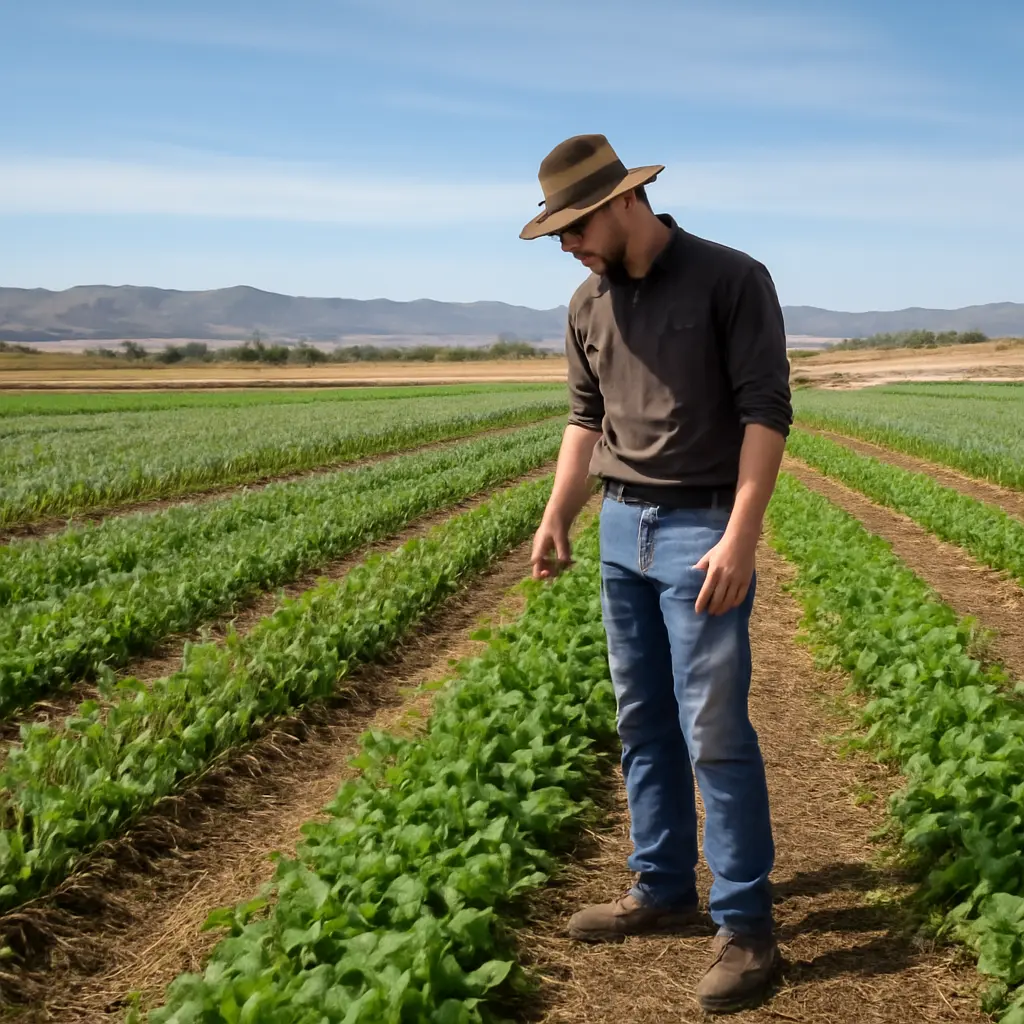
Climate change is reshaping what grows where, and communities must follow suit
Climate change is changing where crops can reliably grow, and agricultural communities must adapt their choices of crops, water use, and farming practices. The U.S. Environmental Protection Agency (EPA) reports that rising temperatures and shifting precipitation affect growing seasons, crop yields, and the geographic ranges of suitable crops. The shift is already visible: USDA research found that warming has contributed to the northward movement of U.S. plant hardiness zones, although local conditions and year-to-year weather still matter. Understanding these changes means looking at crop-range shifts, the risks they create, and practical responses—from breeding and diversification to community-led planning—while recognizing that adaptation cannot replace reducing greenhouse-gas emissions.
Climate change reshapes crop geography and agricultural suitability
Crop geography is the distribution of places where a crop can grow and produce a usable harvest under particular conditions. Those conditions include temperature, rainfall, soil, daylight, pests, and access to water and infrastructure. The Intergovernmental Panel on Climate Change (IPCC) describes climate change as a growing pressure on food production, with effects that vary by region and crop. A place becoming warmer does not automatically become a better farming region: excessive heat, drought, intense rainfall, and new pest pressures can outweigh a longer frost-free season.
Temperature and growing seasons
A growing season is the period during which environmental conditions allow plants to grow. Warmer temperatures can lengthen that period in some cooler regions, but they can also expose crops to damaging heat during flowering and grain formation. The EPA notes that heat stress can reduce crop productivity, while changes in the timing of frost can affect planting and harvest decisions. USDA plant hardiness zones, which classify areas by average annual extreme minimum winter temperature, have shifted toward warmer zones across much of the contiguous United States in recent decades. These zones are useful context for perennial plants, but they do not predict summer heat, rainfall, or farm-level crop yields.
Water availability and extreme events
Agricultural suitability depends on water arriving at the right time and in the right amount. Climate change can intensify drought in some areas and increase heavy precipitation in others; both can damage crops, erode soil, and disrupt planting. The IPCC’s Sixth Assessment Report identifies increasing climate risks to food production, including impacts from heat, drought, and floods. A region with greater annual rainfall may still face water stress if rain falls in fewer, more intense events or outside the crop’s critical growth stages.
Pests, diseases, and ecological change
Crop ranges are also shaped by insects, weeds, and plant diseases. Warmer winters can allow some pests to survive in places where cold once limited them, while altered seasons can change when pests and crops are active. These effects are highly specific: a change that benefits one crop or pest in a particular region may harm another. Farmers and extension services therefore need locally relevant monitoring rather than assuming that a broad climate trend predicts a uniform outcome.
Climate-driven crop shifts create uneven community risks
As suitable growing conditions move, communities face more than a choice of seed. Crop shifts can affect farm income, labor demand, food-processing facilities, transport, local food prices, and cultural practices. The IPCC emphasizes that climate impacts and adaptive capacity are uneven: small-scale producers, low-income households, and communities with limited access to water, credit, insurance, or technical assistance can be especially exposed. A change in regional averages may therefore conceal substantial differences between farms and households.
Farm livelihoods and regional economies
When a familiar crop becomes less dependable, farmers may face lower yields, greater input costs, or the expense of changing equipment and contracts. A new crop may require different storage, processing, labor skills, and buyers, so moving production is not simply a matter of planting a different seed. Rural planners can assess these dependencies through crop, infrastructure, and workforce mapping. Such analysis helps identify whether a possible alternative crop has a viable market and whether local businesses can support the transition.
Food access and cultural continuity
Crop changes can influence the availability and affordability of foods that communities depend on, including culturally important crops. The consequences may be especially serious where households rely on local production or have few alternatives. Adaptation planning can include farmers, Indigenous communities, food businesses, and consumers to identify which crops matter for nutrition, livelihoods, and cultural continuity. Community knowledge is essential because regional climate models cannot by themselves explain local soil conditions, customary practices, or the consequences of changing a crop system.
Communities adapt through diversified crops and resilient practices
Agricultural adaptation means adjusting decisions and systems to reduce harm or take advantage of changing conditions. The IPCC and the Food and Agriculture Organization of the United Nations (FAO) identify approaches that include crop diversification, improved water and soil management, climate information, and stronger agricultural services. These measures are most effective when tailored to local risks; no single crop or technology is a universal solution.
Diversification, crop breeding, and planting choices
Diversification spreads risk across crops, varieties, or planting dates rather than relying on a single harvest. Farmers may test heat- or drought-tolerant varieties, change sowing dates, or add crops suited to emerging conditions. Plant breeders and public research institutions can help develop varieties that tolerate specific stresses, but new varieties require testing for local soils, markets, and nutritional or cultural priorities. Diversification should be evaluated alongside its costs: a new crop may need unfamiliar machinery, specialized storage, or a secure buyer.
Soil health and water stewardship
Soil and water practices can make farms more resilient to both dry spells and heavy rain. Examples include cover crops, reduced soil disturbance, crop rotations, erosion control, efficient irrigation, and improved drainage where appropriate. The FAO promotes climate-smart agriculture as an approach that seeks to improve productivity and resilience while contributing, where possible, to lower emissions. Results depend on local conditions: irrigation, for instance, can protect yields during drought but may worsen groundwater depletion if withdrawals exceed replenishment.
Climate services, insurance, and public support
Climate services translate weather and climate information into decisions such as when to plant, irrigate, or harvest. Seasonal forecasts, extension advice, pest alerts, and risk-management tools can help producers prepare, but their value depends on being accessible, understandable, and relevant to local crops. Public agencies and agricultural organizations can support adaptation through research, technical assistance, infrastructure investment, and carefully designed insurance or financial programs. Support should reach smaller producers as well as operations with greater capacity to adopt new practices.
Regional examples show why adaptation must be local
Climate trends create different opportunities and hazards in different places. A longer frost-free period may expand options in one area, while heat and water shortages undermine production elsewhere. These examples illustrate why communities need locally grounded decisions rather than a simple northward relocation of crops.
United States: shifting zones are a signal, not a planting prescription
USDA plant hardiness maps help gardeners and growers understand changes in winter minimum temperatures and the prospects for perennial plants. Their updated zone boundaries demonstrate that climatic suitability is changing, but they are not a complete guide to commercial agriculture. Farmers also need information about summer heat, rainfall, soil, water availability, pests, and the economics of production. The practical lesson is to combine climate maps with farm-level observations and regional agronomic advice.
California: drought and water constraints shape crop decisions
California’s agricultural regions illustrate how water availability can determine which crops remain viable. The state’s Department of Water Resources documents recurring drought and competing demands on surface water and groundwater. Because orchards and vineyards are long-lived investments, producers must consider future water reliability before planting, not only current conditions. Water-efficient irrigation and groundwater management can reduce vulnerability, but communities also need decisions about allocation, conservation, and the economic effects of changing production.
The Arctic and sub-Arctic: longer seasons alongside new risks
Some high-latitude regions are experiencing longer periods that may permit new crops or varieties. Yet warmer conditions can also bring unfamiliar pests, variable weather, and infrastructure challenges, while permafrost thaw and ecosystem change create broader risks. The IPCC cautions against equating longer growing seasons with guaranteed gains in food security. Local communities need to assess whether new production is feasible, who benefits, and how changes affect traditional food systems.
Conclusion: crop and community adaptation must advance together
Climate change is reshaping crop geography through temperature shifts, altered water patterns, extreme events, and changing pest pressures. Those changes affect farms, regional economies, food access, and cultural continuity unevenly. Communities can respond with locally tested crop choices, diversification, soil and water stewardship, climate services, and inclusive public support. The next step is to bring farmers, researchers, Indigenous and local communities, and policymakers together to identify risks and fund practical adaptation—while also cutting emissions to limit future disruption. For further guidance, consult the IPCC, USDA, EPA, and FAO resources on climate impacts and agricultural resilience.
Sources: U.S. Environmental Protection Agency, Climate Change Impacts on Agriculture and Food Supply, https://www.epa.gov/climateimpacts/climate-change-impacts-agriculture-and-food-supply; Intergovernmental Panel on Climate Change, Climate Change 2022: Impacts, Adaptation and Vulnerability, https://www.ipcc.ch/report/ar6/wg2/; U.S. Department of Agriculture, USDA Plant Hardiness Zone Map, https://planthardiness.ars.usda.gov/; Food and Agriculture Organization of the United Nations, Climate-Smart Agriculture, https://www.fao.org/climate-smart-agriculture/en/; California Department of Water Resources, California’s Water Conditions, https://water.ca.gov/Water-Basics/Current-Conditions; U.S. Department of Agriculture, Climate Change and Agriculture in the United States: Effects and Adaptation, https://www.usda.gov/sites/default/files/documents/cc-and-agriculture-report.pdf